



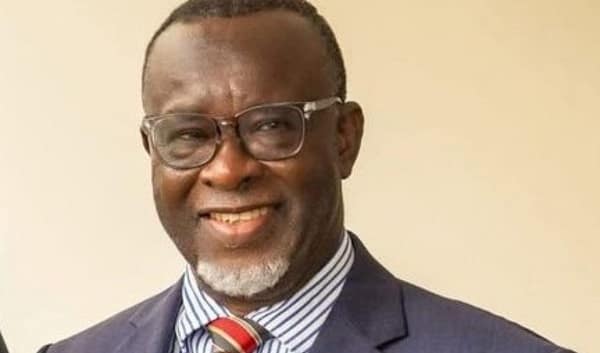
After Removal of Justice Torkornoo, New Judicial Era Begins
Accra, September 23, 2025 — In a move that marks a pivotal moment for Ghana’s judiciary, President John Dramani Mahama has officially submitted the nomination of Justice Paul Baffoe-Bonnie to serve as the next Chief Justice, following the removal of Justice Gertrude Araba Esaaba Sackey Torkornoo earlier this month.
The nomination, issued under Article 144(1) of the 1992 Constitution, now awaits consideration by the Council of State. If approved, Justice Baffoe-Bonnie will formally assume the leadership of Ghana’s Supreme Court and judiciary.
Background: Torkornoo’s Removal & Judicial Upheaval
The path to this nomination is steeped in controversy. Justice Torkornoo’s removal was effected on September 1, 2025, following a constitutional process under Article 146, which saw a five-member committee chaired by Supreme Court Justice Gabriel Scott Pwamang find her guilty of misbehaviour.
The committee’s process was exhaustive: thousands of pages of evidence, testimony from over 25 witnesses, and hours of in-camera hearings. Her removal makes her the first Chief Justice to be dismissed since Ghana returned to democratic rule in 1992.
Justice Torkornoo has strongly contested the process, asserting violations of natural justice. Her legal challenges have spanned the High Court, Supreme Court, and now the ECOWAS Court of Justice. While domestic courts dismissed her cases, her appeal at the ECOWAS court remains pending.
On the Nominee: Justice Paul Baffoe-Bonnie
At 68 years old, Justice Baffoe-Bonnie has long been a fixture in Ghana’s judiciary. Born on December 26, 1956, he has served with distinction across multiple tiers: the High Court, the Court of Appeal, and now the Supreme Court.
Since April 22, 2025, he has held the role of Acting Chief Justice, following the suspension of Justice Torkornoo.
In the presidential nomination, the statement praised his “diligence and integrity,” his contributions to Ghanaian jurisprudence, and “unwavering commitment to justice.”
Constitutional & Political Significance
1. Legitimacy & Continuity
This nomination reinforces the constitutional mechanism for filling the apex judicial seat. It underscores that even after a controversial removal, the judiciary must remain functional and stable.
2. Checks & Balances Under Test
Given the backdrop of Torkornoo’s removal, the process—even though lawful—will be closely scrutinized. Judicial independence, fair hearing, and separation of powers are at stake. Any perceived partisanship could weaken public confidence.
3. The Role of the Council of State
Under Ghana’s constitution, the President’s nomination is not final—the Council of State must advise, and Parliament typically confirms the nomination. Thus, Baffoe-Bonnie’s confirmation is dependent on political and legal checks beyond the presidency.
Challenges & Risks Ahead
- Perception of Bias: The removal of a sitting Chief Justice is fraught with political tension. Justice Baffoe-Bonnie must navigate perceptions of being a “government nominee” while preserving judicial independence.
- Age & Succession Planning: At 68, Baffoe-Bonnie is not far from mandatory retirement age (which varies by jurisdiction). Whether his tenure will be short or extended depends on legal rules and possible reforms.
- Reconciling the Judiciary: The dismissal of a predecessor after lengthy legal proceedings may leave divisions. The new Chief Justice will need to manage institutional morale, restore trust, and unify judicial ranks.
- Inherent Court Challenges: Ghana’s judiciary faces heavy case backlogs, resource constraints, and pressure to keep pace with evolving legal needs. Baffoe-Bonnie must also bring administrative reforms.
Projected Path Forward
- Council of State Review: The nomination is forwarded for counsel and advice. Public submissions or objections may feature in this period.
- Parliamentary Confirmation: A likely hearing before a committee (Judiciary Committee) to vet his credentials, past judgments, and integrity.
- Oath & Formal Induction: Once confirmed, Justice Baffoe-Bonnie will take the oath of office and formally lead the judiciary.
- Agenda Setting: Among early expectations: clearing case backlog, expanding access to justice, enforcing ethical reforms, strengthening lower courts, and possibly digitizing judicial processes.
- Role in High-Stakes Trials: As Chief Justice, he may preside over or influence constitutional cases, election disputes, or governmental actions with far-reaching consequences.
Conclusion
President Mahama’s nomination of Justice Baffoe-Bonnie as the next Chief Justice arrives at a tumultuous moment for Ghana’s judiciary. Following the historic removal of a Chief Justice and a period of acting leadership, the country faces a balancing act: ensuring stability while guarding judicial independence.
If Baffoe-Bonnie is confirmed, his legacy may hinge not only on how he leads the Supreme Court, but how he shepherds Ghana’s legal system through one of its most sensitive transitions in decades.
DISCLAIMER: The Views, Comments, Opinions, Contributions and Statements made by Readers and Contributors on this platform do not necessarily represent the views or policy of ahantawest.com