


September 18, 2025
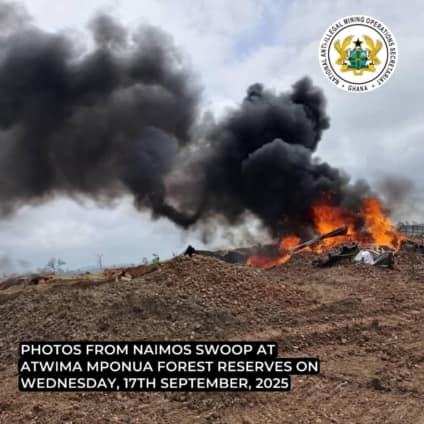
The fight against illegal mining in Ghana has entered another decisive phase. On September 17, the National Anti-Illegal Mining Operations Secretariat (NAIMOS), supported by the Forestry Commission and the 4th Infantry Battalion of the Ghana Army, stormed the Atwima Mponua Forest Reserve, seizing nine excavators and multiple pickup trucks in a well-coordinated dawn raid.
The operation, carried out in the Nkawie Forest District’s Offin Shelter Belt, is being described as one of the largest in recent months. It marks a significant show of force against entrenched illegal mining operations that have devastated water bodies and forest reserves across the country.
The Raid and Its Findings
The task force, acting on intelligence from local residents, uncovered an alarming stockpile of galamsey machinery. Among the seized items were:
- Nine excavators hidden in forest clearings.
- Three pickup trucks (two Toyota Hilux and one Nissan).
- Water pumps, fuel depots, radiators, batteries, gas cylinders, and other accessories.
In addition, makeshift camps believed to be operated by foreign nationals were discovered, though occupants had fled before the arrival of the security team.
Some machinery, including changfan engines and water pumps, were destroyed on-site to prevent reuse.
Implications for the Galamsey Fight
The Atwima Mponua raid is more than a symbolic victory. It represents a strategic disruption of galamsey supply lines and sends a strong message to both local and foreign operators: illegal mining will not be tolerated.
Yet, experts caution that without sustained monitoring and legal follow-up, the operators may regroup elsewhere. This has long been the pattern in Ghana’s galamsey landscape.
The Bigger Picture: Forests and Communities at Risk
Illegal mining is not just about gold extraction — it is an existential threat to Ghana’s environment:
- Forests are being depleted at alarming rates.
- Water bodies are polluted with mercury and heavy sediments.
- Agricultural lands are destroyed, undermining food security.
Communities that once depended on farming and fishing are being forced to grapple with barren lands and poisoned rivers.
What Must Follow
The success of the Atwima Mponua raid should inspire long-term strategies, including:
- Sustained Surveillance – using satellite monitoring and local intelligence to detect illegal operations early.
- Prosecution of Financiers – going beyond machine operators to arrest and prosecute those funding galamsey.
- Community Engagement – empowering locals to report activities and benefit from protected ecosystems.
- Alternative Livelihoods – providing young people with realistic economic options in agriculture, vocational training, and sustainable mining practices.
Conclusion
The Atwima Mponua operation marks a critical step in Ghana’s war against galamsey. It highlights what can be achieved when government, security agencies, and local communities work together.
But one question remains: will this be remembered as a turning point, or just another chapter in Ghana’s long struggle with illegal mining?
The answer lies in what happens next.
DISCLAIMER: The Views, Comments, Opinions, Contributions and Statements made by Readers and Contributors on this platform do not necessarily represent the views or policy of ahantawest.com