


September 19, 2025
Ghana is waking up to the painful truth—galamsey’s toxic footprint doesn’t stop at mining pits; it extends all the way from the corridors of power at Jubilee House to the quiet huts in the deepest villages.
Rivers of Poison
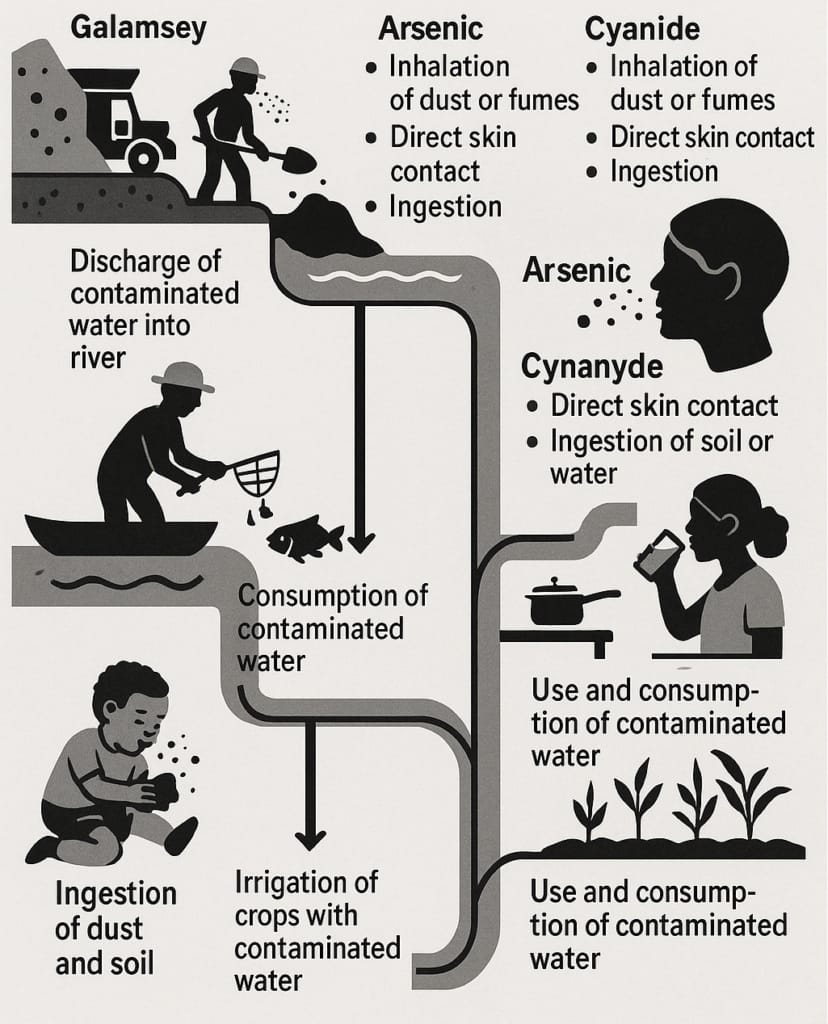
Once clear streams have turned muddy brown, sometimes golden with chemical waste from illicit gold mines. In the Pra, Birim, Offin, and other basins, rivers carry mercury and cyanide diluted downstream long after the mining has ceased. Villagers no longer drink from rivers they once trusted; fish die off, crops wither, and fresh water wells show dangerously high levels of contamination.
Soil Scarred & Farms Lost
Ghana’s farms are under siege. Mining tailings, arsenic-laced runoff, and mercury vapour all seep into the ground. Cocoa, a backbone export crop, is being obliterated in zones once fertile. Maize, cassava, vegetables—crops that feed households—are no longer safe. Communities watch yield drop, blossoms fall off, produce wither under the weight of invisible poisons.
Invisible Air Threats
It’s not only water and soil. The air itself is becoming a delivery path for toxins. Mercury vapour, arsenic aerosols, silica-laden dust—all drift on the wind. Farmlands far from mine sites report damage; nearby forests and villages breathe in air that carries risk. Skin ailments, stomach issues, even birth defects are now part of life in many mining and post-mining zones.
What Every Ghanaian Is Consuming
Even city dwellers should be wary. Fish caught in contaminated rivers often find their way into markets in Accra and Kumasi. Crops irrigated with polluted water are packaged into food supply chains. Drinking water reservoirs source from watersheds impacted by mining. Ultimately, the mercury and arsenic find their way to dinner tables across Ghana.
Power, Policy, and Accountability
Laws exist. Environmental protection frameworks are on paper. But enforcement lags. Many illegal miners operate with impunity. Regulators falter. Officials turn a blind eye. Community protests have been met more with silence than action. If Ghana is serious about protecting its people, accountability must go all the way to the top.
Looking Forward: The Crossroads
Ghana stands at a crucial junction. Either we continue down the path of destruction, where every rain, every crop, every breath carries a hidden price. Or, we enact bold action:
- Strict enforcement of environmental laws.
- Removal of illegal mining equipment.
- Close monitoring of water, air, soil.
- Support for clean, sustainable livelihoods.
- Education and awareness in both villages and cities.
Because once the poisons are in the land—mercury in water, arsenic in plants—the damage becomes generational. And the cost, to health, to economy, to dignity, becomes immeasurable.
✍️ Author’s Note
This is not an academic exercise. This is urgent. From Jubilee House to the village hut, Ghana’s poisoned legacy of galamsey is one we create together—and one we must dismantle together.
DISCLAIMER: The Views, Comments, Opinions, Contributions and Statements made by Readers and Contributors on this platform do not necessarily represent the views or policy of ahantawest.com