

Washington, D.C. — July 9, 2025
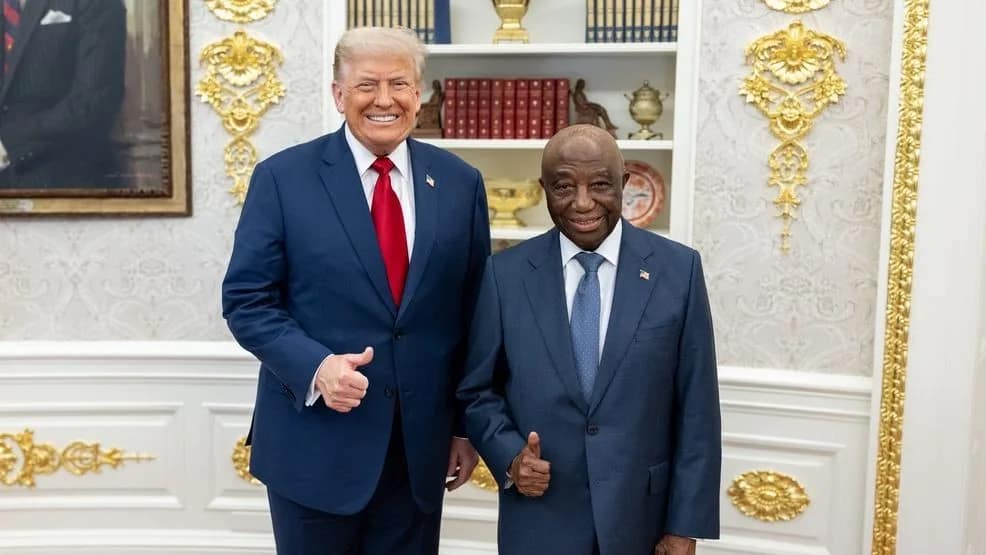
During a White House luncheon with five West African leaders on Wednesday, U.S. President Donald Trump raised eyebrows with an awkward compliment to Liberian President Joseph Boakai, asking where he learned to speak such “beautiful English” despite it being Liberia’s official language.
As Boakai spoke in fluent English—advocating for greater American investment in his country—Trump responded with enthusiasm:
“Such good English… Where did you learn to speak so beautifully? Where were you educated?”
When Boakai, amused, noted he learned English “in Liberia,” Trump appeared surprised.
“That’s very interesting… I have people at this table who can’t speak nearly as well.”
🌍 Historical Context & Cultural Sensitivity
- Liberia was founded in 1822 by freed American and Caribbean slaves and declared independence in 1847.
- English has been the country’s official language since its inception. Many Liberians, including President Boakai, were educated in English-speaking schools.
📢 Reactions from Liberia & the U.S.
- Liberian Foreign Minister Sara Beysolow Nyanti stated no offense was taken by Boakai, describing the remark as recognizing the American influence on Liberian English.
- She added that Liberia remains committed to strengthening “ties built on mutual respect, shared values, and meaningful partnership” with the U.S.
- Liberian opposition figures like Foday Massaquio criticized the remark as patronizing and disrespectful, saying it reflects broader Western disregard toward African nations.
- Public sentiment in Liberia was mixed—some felt insulted, while others said Trump’s comment reflected ignorance rather than malice .
🤔 What This Reveals
This incident highlights the delicate balance of international diplomacy and cultural awareness. While intended perhaps as a compliment, Trump’s surprise at Boakai’s fluency spotlighted the need for geopolitical leaders to be versed in their counterparts’ histories and backgrounds.
It also comes amid broader shifts in U.S. policy—such as cuts to USAID funding in Liberia, which accounts for nearly 3% of the country’s GDP—prompting concerns about the future of bilateral relations.
🔎 Takeaway
- Diplomatic faux pas: Trump’s remark, likely intending praise, has drawn both criticism and defense.
- Roots of misunderstanding: Oversight of Liberia’s shared American heritage fueled the surprise.
- Impact on relations: Although Dillon’s comment sparked debate, Liberian officials have maintained a forward-looking stance toward U.S. engagement.
DISCLAIMER: The Views, Comments, Opinions, Contributions and Statements made by Readers and Contributors on this platform do not necessarily represent the views or policy of ahantawest.com