



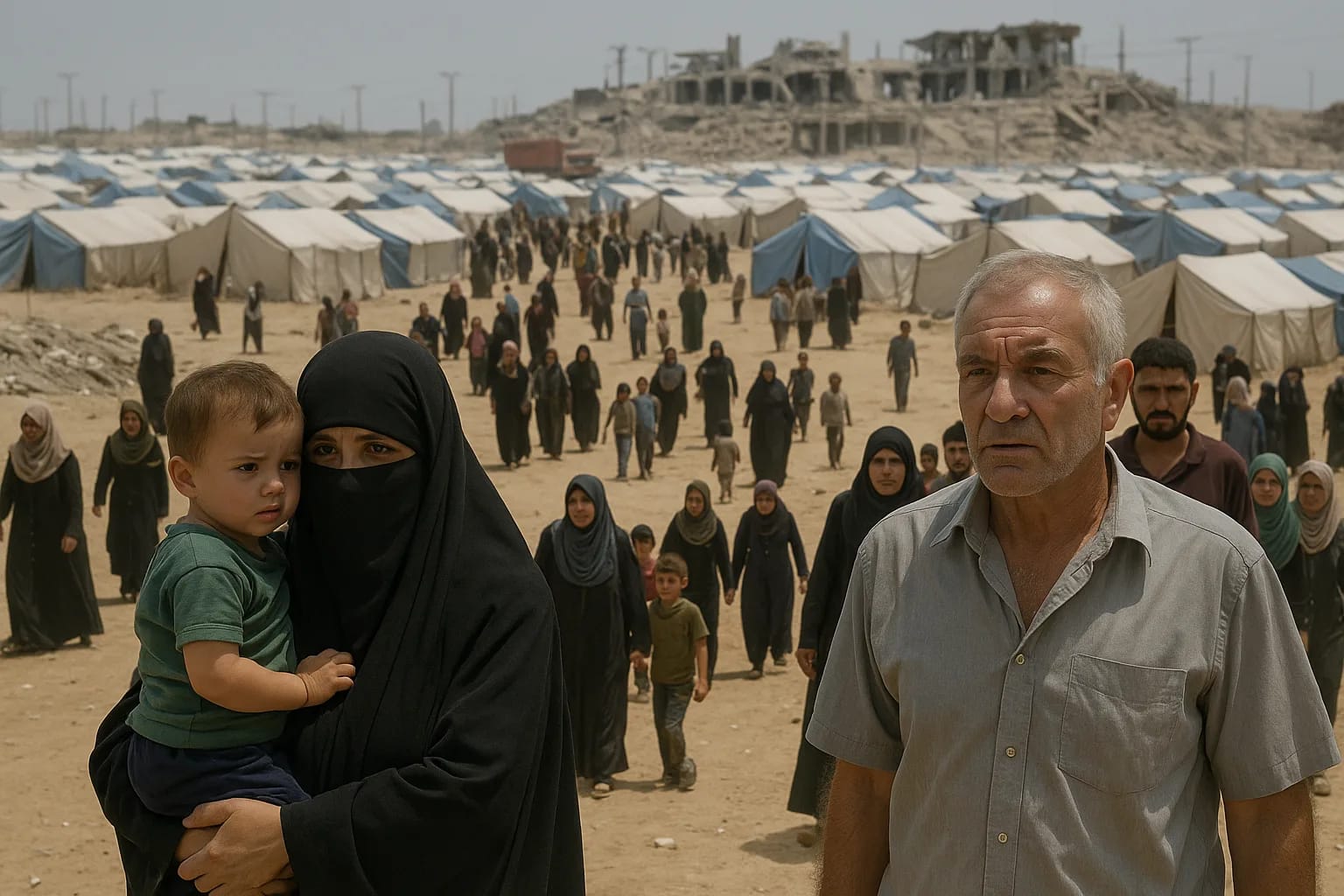
In a controversial announcement that has sparked global outrage and fears of mass displacement, Israeli Defense Minister Israel Katz revealed Monday that he has directed the military to develop a plan to relocate all Palestinians in Gaza into a designated camp area in the southern region of the enclave.
Katz described the project as a “humanitarian city” that would be established on the ruins of Rafah, a city already devastated by months of conflict. The initial phase would accommodate 600,000 displaced Palestinians, with long-term plans to resettle the entire 2.1 million population of Gaza.
“This is not an evacuation—this is a solution,” Katz told Israeli reporters in Tel Aviv. “We are seeking a long-term framework that addresses both humanitarian concerns and our national security priorities.”
The move comes amid stalled cease-fire negotiations between Israel and Hamas, and follows earlier proposals reportedly supported by former U.S. President Donald Trump, envisioning Gaza as a luxury development zone once cleared of its current population.
International Backlash
The announcement has triggered strong reactions from the international community, with many viewing the plan as a thinly veiled attempt at forced displacement.
UN Special Rapporteur on the Occupied Territories, Dr. Nadia Hassan, condemned the proposal:
“Any effort to forcibly transfer a civilian population is a grave violation of international humanitarian law, and may constitute a war crime under the Geneva Conventions.”
The European Union, in a statement released Tuesday, said:
“We urge restraint and reaffirm our position that the population of Gaza must not be coerced into abandoning their homes. Sustainable peace cannot be built on dispossession.”
Palestinian Response
Leaders in both Hamas and the Palestinian Authority swiftly rejected the plan.
“This is ethnic cleansing in broad daylight,” said Dr. Mustafa Barghouti, a senior Palestinian official in Ramallah. “No humanitarian city built on rubble can justify the erasure of our people.”
In Gaza, already suffering from severe humanitarian crises, residents expressed shock and despair.
“We have lost homes, families, and now they want to move us like cattle,” said Umm Saleh, a mother of four sheltering in Khan Younis. “We are not a problem to be relocated. We are human beings.”
Israeli Defense Perspective
According to defense officials, the proposed city would include modular housing, temporary infrastructure, and controlled security zones. Critics, however, argue that such zones would function more like internment camps than safe havens.
Israeli security expert Col. (Ret.) Eli Ben-Meir defended the move:
“This is a pragmatic security solution. Gaza is uninhabitable in its current state, and creating a concentrated, monitored area reduces risks and allows aid to be more efficiently distributed.”
Humanitarian Concerns Escalate
Aid organizations, including Médecins Sans Frontières and the Red Crescent, warned of the logistical impossibility of relocating millions under current war conditions.
“There is no clean water, no medical facilities, no infrastructure. Moving people into a desertified zone is not humanitarian—it’s catastrophic,” said Salwa Rahman, regional coordinator for Save the Children.
Conclusion
As the situation develops, observers fear that Katz’s proposal may further isolate Israel diplomatically, exacerbate regional tensions, and deepen the suffering of civilians already caught in the crossfire of an enduring conflict.
More to follow as international negotiations unfold.
DISCLAIMER: The Views, Comments, Opinions, Contributions and Statements made by Readers and Contributors on this platform do not necessarily represent the views or policy of ahantawest.com